Current Projects
These are some of the topics we are currently investigating. We carry out our research in a range of settings, including our university laboratory, local schools, and museums and cultural sites.
Imagination and Morality

In this line of work, led by PhD student Zeynep Genc, we study the two-way relationship between our moral judgments and imagination. Specifically, we look at how morality constrains the possibilities we consider, and how the possibilities we consider can shift our moral evaluations. In our recent studies, we have found that whether children are prompted to consider how a situation could have been better or worse affects their evaluations of what actually happened (Genc & Nyhout, 2024). Likewise, we have found that children start to use their imagination to ‘undo’ aspects of reality that involve violations of moral norms around the age of 6. We are currently studying other constraints on children’s imaginations and how imagining affects moral behaviours like sharing.
Imagination and Reading
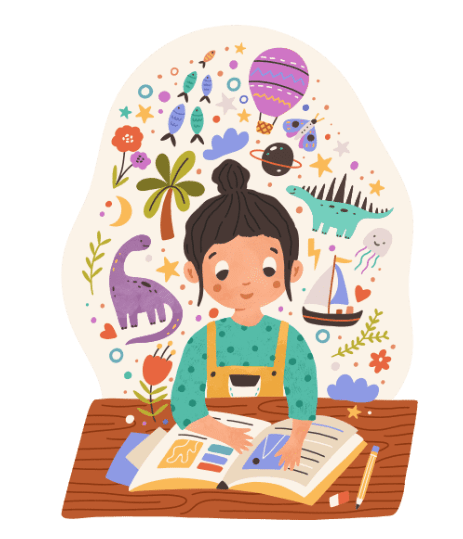
When we read or listen to a story, the story often seems to come to life in our minds. Yet this is not the experience for everyone. Whereas some people experience vivid mental images when reading, others experience mental images faintly or not at all. We are interested in the role that mental imagery, and specifically our ability to imagine scenes, plays in our understanding and enjoyment of written texts. We are particularly interested in how this ability to imagine scenes impacts on reading comprehension as children are learning to read.
Who is more imaginative? Children or adults?
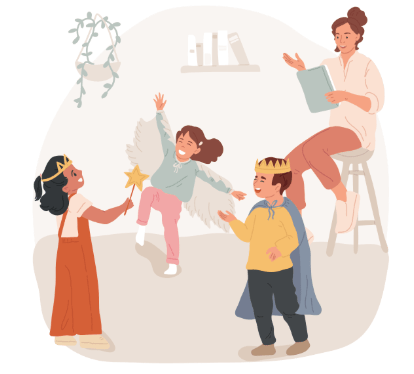
Do our imaginations peak in childhood, or do they continue to grow as we get older? How do the possibilities we imagine change as we grow, and when we are in different situations? In these studies, we are examining how people of different ages imagine different possibilities.
For example, in one study we conducted at Dover Castle, we showed visitors (aged 5-80+) unfamiliar Roman objects and asked them to imagine all the possible ways they could be used. We found that older participants came up with more possibilities, and these possibilities tended to be more unique compared to younger participants. Adolescents and young adults generated ideas that spanned a wider range of categories than other age groups.
See our work with English Heritage here!
Science learning and scientific reasoning
The ability to contemplate the possible or consider familiar problems from different angles can drive scientific discovery. Equipping children with scientific skills and conceptual knowledge is important not only for raising the next generation of scientists, but also for developing a scientifically-literate society that can analyse claims and evidence they encounter. In these studies, we are looking at how encouraging children to consider alternate possibilities supports both their learning of scientific concepts and their ability to engage in scientific. We are also examining how children learn scientific skills from picture books.
Young researchers
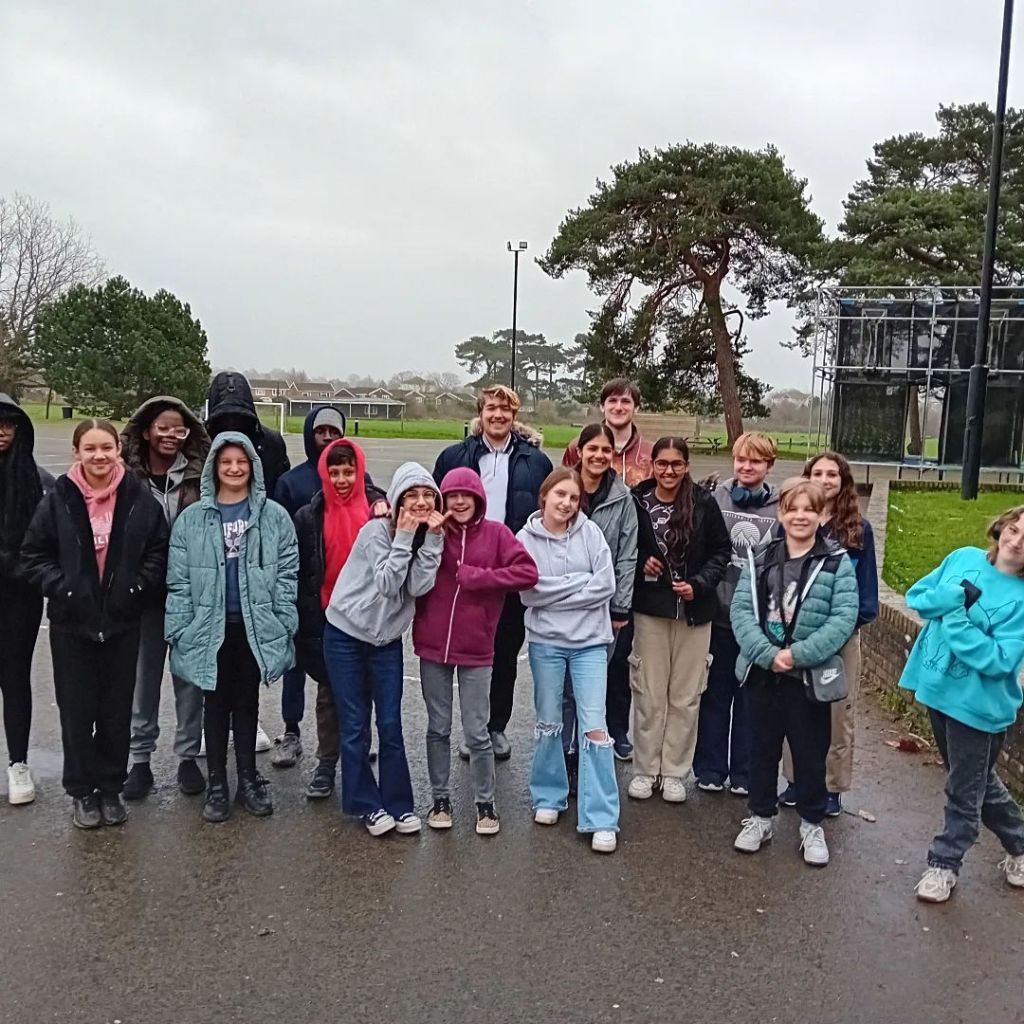
We work with Kent County Council to train the next generation of social scientists. We provide workshops for young people aged 11-17 who go on to design and administer surveys to answer their research questions. So far, our young researchers have investigated questions about the effects of social media on self-esteem, mental health, and political attitudes, as well as people’s attitudes towards the UN’s Sustainable Development Goals. If you are interested in our young researcher training, please get in touch!
Some of our Young Researchers created this video about their experience.
Some of our recent work
Imagining a better world improves children’s moral judgments
Children’s ability to perform thought experiments about ecosystems develops between 5 and 7 years
Moral Understanding and Media: Meeting the Challenges of Interdisciplinary Research
How are the abilities to remember the past and imagine the future related in childhood?
Considering alternative possible worlds supports children’s learning of astronomy
Four- and five-year-olds can think counterfactually when asked about simple machines
 Imagination Research Group